
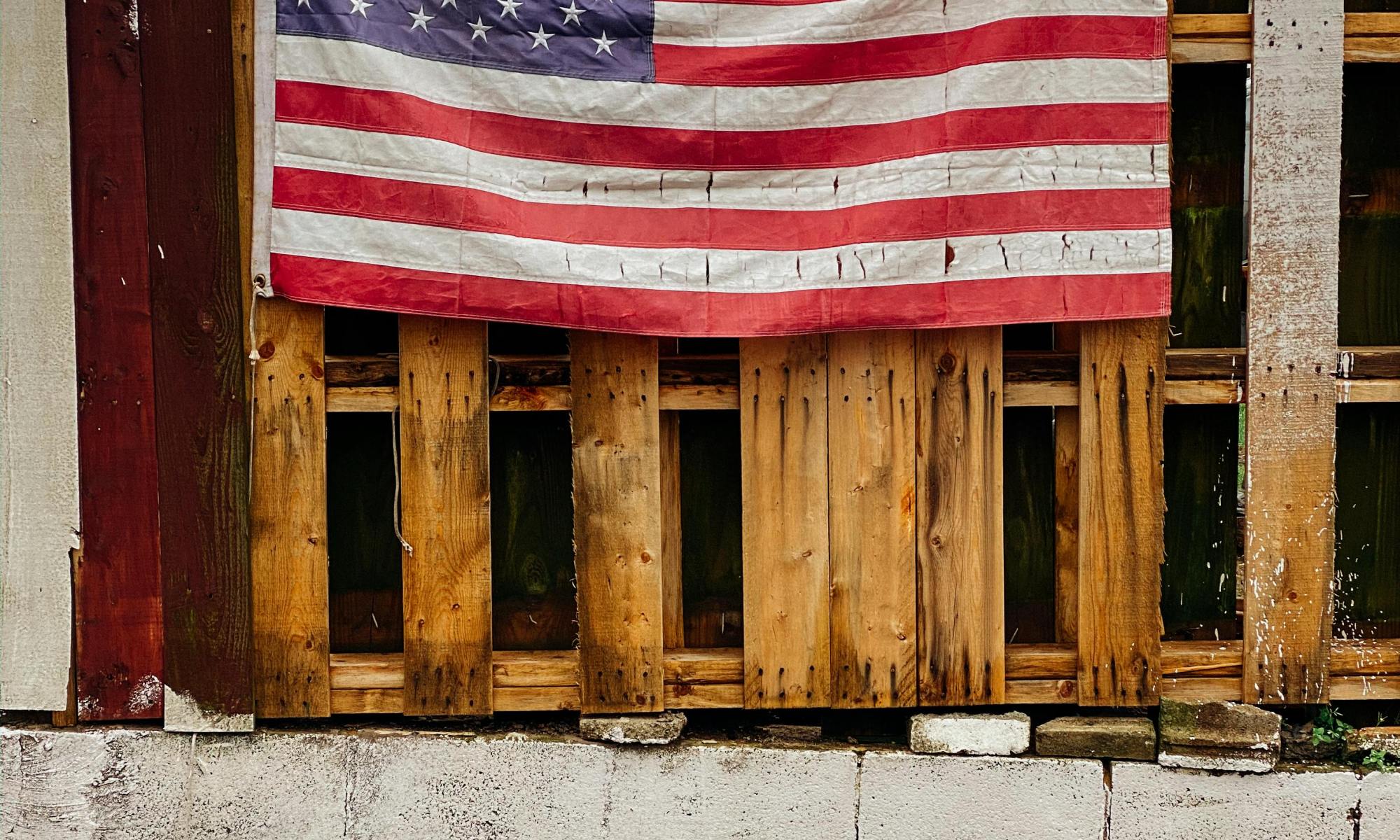

On the West Coast, where I am, it’s the quiet before the cacophony. If you have only celebrated the Fourth of July in an East Coast town, or the Midwest, I venture to say you don’t know what noise is. You cannot imagine the noise, the joy, of absolute celebration that starts last week and continues on for days after in a place where there are large swatchs of people from cultures that brought with them to this place a history of celebrating with fireworks and explosions, and an absolute love for their chosen country. And I think we ought to say, whether the United States of America is the country where you first took a breath or the country you came to later, to stay here, or to be here always, is a choice, and so it is the chosen country of even those for who it is the first and only country they have ever seen.
When I was a child I loved the Fourth of July. I had sparklers, and my patriotic clothing, and I decorated my bike, and the fathers and sons of Ridley Park played baseball in the field behind our house, and the mosquitoes chowed down, and we lit punks from the crick to ward them off, and had Pepsi’s in glass bottles, and hot dogs and potato salad to eat, and we wound through the working class streets to the fire department for the fireworks after the sun went down. I don’t think I had any idea that my neighbohood was very much a place where everyone was the same. I don’t think I understood, aside from the notion that some of us were Catholics and some of us were Methodists, how much all the families were just alike, and living in carbon-copy twin homes, and eating the same meals each day, with fried eggs for breakfast, Lebanon bologna sandwiches for lunch, and pork and beans from a can for dinner.
When my mother moved us to the town where her sister lived, the sister who had married the cardiologist, we found ourselves working class among people who were not, among people who were wealthy and never made a sound outside of their houses beyond the sound of their lawnmowers, among Methodists who didn’t have potluck suppers twice a month. Some of the neighbors were Jewish, and I didn’t know what that was until we read Anne Frank’s diary in sixth grade. Some of the kids in my school grade, about eight of them, came from the tail-end of the town, down around the train tracks, and they were Black, and they lived in clapboard houses that had been cut up by floor into apartments so that they could be stacked on top of each other, and the houses had been surrounded by train tracks and truck routes and second-hand stores, and they had a long walk home after school. There was one girl in my grade who was Korean, but her parents were white. There was another girl who told me she was adopted, but she looked just like her parents. And still another friend was Morman, and her mother sent me home from her house when, as all of us played on the trampoline her family had in the yard, I bounced off and yelled out, “Oh my God I almost died!” Her mother told me I was a bad girl, and had to leave. Because we went to church, in my opinion, all the time, and my mother and I sang in the choir, and my parents, my “churchy” parents, said, “Goddamit!” whenever they dropped an egg or spilled something, I did not understand at all exactly what had gone wrong.
When I commuted into Philadelphia for college, on the trolly and then the El, and finally the subway, I could watch the demographics change as I moved from my quiet quiet town closer to the most left-behind part of the city. It was noiser, dirtier, and a lot more people said, “Goddamit,” pretty much any place at all, even in the offices of the school, even in class, or yelling on the subway. Once I was walking to the subway before the end of fall term on a very cold night, and the row homes lining the street had metal sheets over the doors and windows, and one house had a chink missing out of the metal over the window, and I saw a tree inside with Christmas lights on it.
In college I met Rick and Randy, my first gay friends, so handsome, so fun, rommates and friends with benefits, who ironed their jeans (!) and patiently explained to me that sometimes men loved other men.
I could go on with my brief summary of how I learned about difference in the world, but really, it’s not that interesting.
Sometimes the difference has challenged me, and I’ve had to recalibrate my thinking and tell myself that someone who is noisier than I would prefer is still a human being, or someone who tells me I can’t say “Oh God!” in their house is not mean, or someone whose food is comprised of animal parts I would never eat is not weird, and the women holding hands and kissing at the bar where I kissed my boyfriend the prior night are not wrong for their PDA if I was not wrong for mine. And all of us can love this country.
No one owns the flag more than anyone else (except maybe Betsy Ross: seamstress extraordinaire, who is also from Philly!). Yet sometimes I feel like people among us are redefining patriotism in a way that leaves me out. I was so excited for the Foruth of July when I was a young girl, and I still think this country is pretty great. Yes, it’s messy, but all experiements are messy. Everyone who first opened their eyes in this country, and everyone who chose to emmigrate here, is part of that experiment, is part of the tweaking and re-working all experiements go through. And my life was great as a kid in that small working class town, and it is better for each new experience my path through the world has brought me. Each new place, experience, person has enriched my biography, not ruined it because it did not stay static.
The country is in a bit of a mess right now, and that mess, to me, means that something is being worked out, the wheels are turning to make a change. I feel like, given its track record, this country will find its way to a good, new version of itself, even as some of the forces try to push it back to the summers when only the men played baseball in the field on the Fourth of July. As good a time as that was, it left me out. Now, not that I’m a stellar second baseman, but this experiment was begun, all those years ago, by people who wanted a chance to create a place were no one as left out. Of course, at the time, they meant only men, but the experiment was set in motion to see if it was possible to create a place that would have fairness as its guiding principle, as its ultimate goal.
Fairness as a guiding principle? Count me in for that!
Happy Birthday USA.
 Dianne Pearce Writes