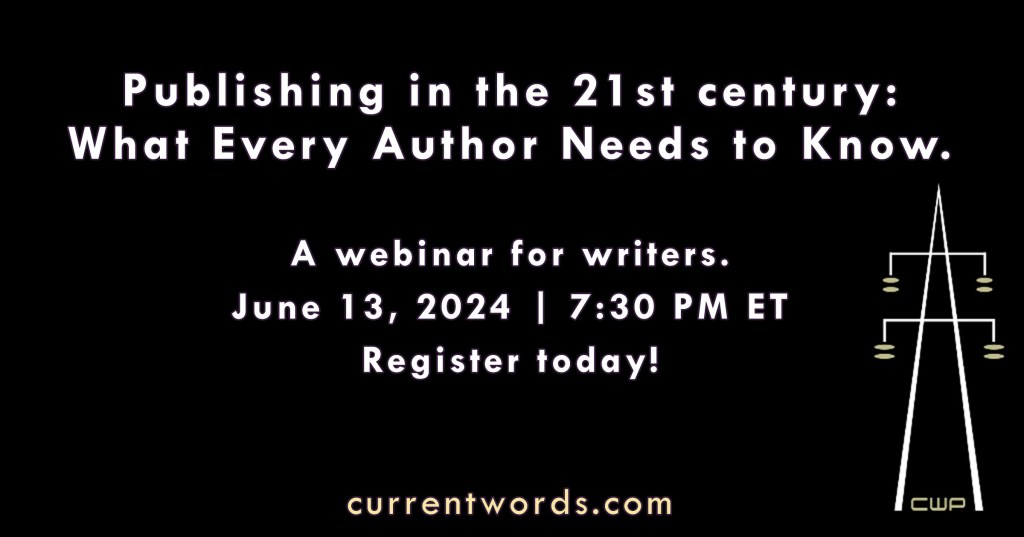
Tonight is your night to get your questions answered!
The webinar is free, and you can ask me any of your publishing questions without paying to see me at a conference!
So, c’mon, join in!

Publisher @ Current Words Publishing

Tonight is your night to get your questions answered!
The webinar is free, and you can ask me any of your publishing questions without paying to see me at a conference!
So, c’mon, join in!
I cannot believe how long it has been since I last did one of these posts.
Well, I’m back baby. 🙂
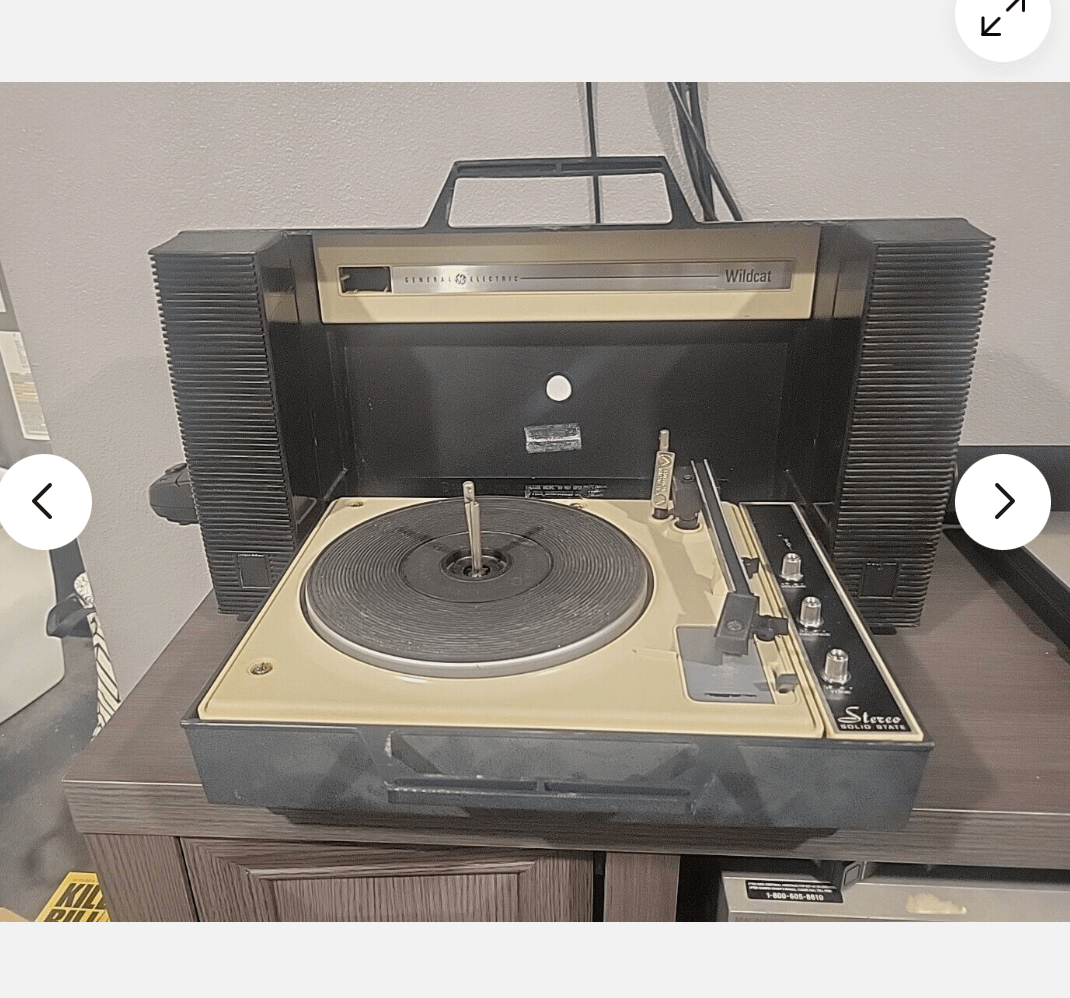
Once upon a time I had a fairly large vinyl collection. And then I started moving often. I took the whole collection with me to the dorms my first year of college, and when I flunked out that first year and my mother kicked me out of the house, I took the whole collection (and my rickety record player)
And here it is (thank you eBay!):

From there I went, eventually, back to my parents’ house, which was the worts place for me, and for which I blame Ronald Reagan (there were no jobs). After I got my degree, and then a few jobs, I moved myself and my record collection to my boyfriend’s house. But that lasted about 3 years because I am a bad picker, and so I eventually decied to move out so his new girlfriend could move in, even though he would have been happy to have me stay on, oddly enough.
My record collection and I went from the suburbs to Philly. I had an awesome, if rodent-infested, apartment in West Philly for about three years, until I managed to buy a small twin in Roxborough. I lived there for one of the longer periods of staying-put, just about seven years, and then, having both gotten sick of the parking situation (trashcans in the street anyone?) and swept David off his feet, I moved to CA, and sold or donated most of my collection (and, luckily, my sister showed up at the donation place right after I left, and she rescued a few of them, (inlcuding my Wings Over America, which she very kindly returned to me last month! It still has all the skips in it I remember. Delicious!) Of course the record player, the double of which is now selling on eBay, had long since died, so there was not anything to play the vinyl on anyway. And have you attempted to travel with vinyl? It slips and slides and weighs a literal ton. But, it is still my favorite way to listen to music.
Just to get us up to date: I spent 4 years in Venice Beach, and 4 years in Canoga Park, and then we went back to the East Coast, reluctantly for me. There was a year back in my mother’s house (my father was gone), which, was, again, the worst place for me, and then we landed in teeny tiny Milton. Whicle we were there my sister, who was living n Brooklyn, found a record player in the trash which she gave to me, and I started lisstening to my little stash once again. I had mostly saved the family Christmas albums that my mother had tried to sell at a garage sale once in my presence (the Philistine!), my small jazz collection, my smaller bluegrass and cajun collection, and a few rock albums. We then spent (I believe) exactly 7 years in Milton (about 3 too many), and then we came back to CA, and we spent 1.5 years in Montclair, and now we’ve settled in Monrovia. We’ve been here almost 9 months, and I could see myself not leaving, actually. We’re renting, which is not ideal (it’s been 16 years since I last had a rental), but we’re one-block from a street full of restaurants, which I love, and we turn the corner from our rental and see the mountains, and we’re all very happy. It’s like we found our way back home, to some extent. And so I have started collecting vinyl again, and we have just a wonderful front porch, and David recently surprised me with a second record player, very small, for the front porch. The past couple of weeks I’ve been lugging the laptop out to the porch (and the precious coffee), and working out there, and now I have music too, which is very distracting, but I do love it.
And this is about one of the most recent albums I bought, which I used to have on CD, lord do I hate cds! But that’s what we used to have for the car. In any case, I got myself BY THE WAY by one of my top 5 favorite rock bands, the Red Hot Chili Peppers, on vinyl. It’s a two record set, and disc 2 side 2 has four songs on it that I wish, each one of them, would never end.
I think I first got into the Chili Peppers when they put out “Breaking the Girl,” which is on BLOOD SUGAR SEX MAGIK (which Dave got me on vinyl to go with the record player!). And that song is a really well known one, and a really good example of why I love them. First of all… funk. I love funk, and, in my view, they are funk. Second, they have a vibe, a thing that goes on in their music which I can only describe as cacophony. It sounds like someone is tapping a glass, and someone else is banging pot lids, and someone else is clapping, or there are street sounds, just… a lot of sound. Their songs are really layered and tend to, in general, really improve my mood any time I hear them. They make me want to move around.
Disc 2 side 2 is one of their more mellow outings, but it still has the layers of musics and noise, and it makes me want to move and sing, and I get it gloriously stuck in my head. I expect I will wear out the album, but it will be this side I destroy first, in the same way you might destroy your favorite teddy bear from sleeping with it so hard.
The first track is “On Mercury.” It has a Mexican/mariachi sound to it. I’m a big Herb Alpert fan, and it is reminicsent of that sound I think. It reminds me a bit of “The Lonely Bull.” It’s fast and upbeat, and it repeats the chorus, and I love the idea of “lemon trees on Mercury,” because I am certain that if trees on Mercury were possible, the would be lemon yellow, almost as if being so close to the sun burned them yellow, rather than buring them black.
“I change the key from C to D; you see to me it’s just a minor thing; he knows everything.” The second track on thsi side is “Minor Thing,” and even though minor keys are associated with being down, or sinister sounding, this song is very upbeat. The guitar that anchors this song sounds like vintage U2, and I would be willing to bet there’s a flute or recorder being played though it. It’s a fast song, and a little bit rap, and I just feel like it’s clever.
Then the tempo slows and Kiedis sings, “Shiver for me girl…,” and goes on to sing, “….swim for your smile in a blue rock quarry,” and ends with the words, “…settle for love.” It’s got an orchestra playing along with the band, and I think it’s very romantic (and it helps that I’ve always found the whole band to be easy on the eyes). It’s called “Warm Tape,” and I find myself going through my day repeating the “shiver for me girl” part over and over, though I confess I don’t “get” the title.
The last song on disc two side two is “Venice Queen..”
SatoriTree has this to say about it on Reddit:

If it’s true, it makes it even better. It’s not a slow song, but the vibe is very mellow, and it begins sounding almost mystical. Flea does great harmonies on this one, and he and Anthony sound to me like they could be family because their voices meld so well. I like to sing Flea’s part when I sing along, but I often like to sing the harmony. I think I would have made a fantastic back-up singer, can hold a harmony well, and I’m not really looking to be a front man.
LOL, in some ways, maybe that is why I am so passionate about publishing people. I’m not a front man, really, but I’m a helluva back-up singer.
While I have been picking away at the keys trying to write this post, being interrupted by my daughter, and my dog, multiple times over, I have listened to this on repeat, disc two side two, about 4 times, and when I finish typing this, I’m going to start it again.
“I see you standing bby the sea; the waves you made will always be; a kiss goodbye before you leave, G*L*O*R*I*A is love…. my friend, my friend, my friend….
I think anyone who dismisses the RHCP out of hand as just noise, or whatever, needs to really take a listen. This band has very complicted music, and gorgeous lyrics, and they just may be hiding them from people who judge them by their looks. And, as I alluded to above, I like their looks just as much as their music. But, really, this is a complex and talented band, and every time they make new music, I’m in.
OH MY GOODNESS, how did I just find this today?:
So fun! I love the Peppers!

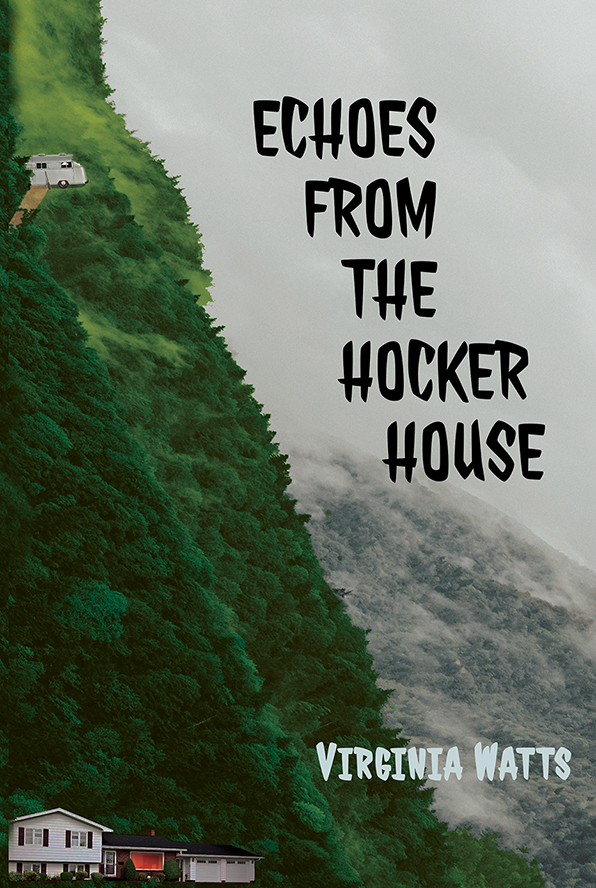
Big shoutout to Virginia Watts, one of the OGs at OSP! Her short story collection, ECHOES FROM THE HOCKER HOUSE, just landed on the shortlist for the 2024 da Vinci Eye Award and the Eric Hoffer Book Award. As the editor on this project, I gotta say, these stories are straight-up mesmerizing. They’ll take you on a journey you will not be able to forget, and I wouldn’t be surprised if you binge-read the whole thing in one go. Virginia, you’re killing it! Fingers crossed for the win!
PS. Virginia already won this one!


bsolutely delighted to extend a warm invitation to join us for a Current Words One-And-Done Session—an exclusive and enjoyable opportunity designed specifically for fiction and memoir writers to refine their skills in a highly supportive environment. And guess what? It comes at no cost to you!
Picture this: a virtual gathering hosted by Di and Dave (D&D), happening from 9-11 AM Pacific time on select Saturdays, and limited to just five participants. In an intimate Zoom setting, you’ll exclusively share your work with D&D along with the other participants. D&D will come prepared for a deep dive into your work, seeking out your distinctive patterns, challenges, and talents as an author.
Here’s the rundown on how to secure your spot: shoot us an email with a 450-550 word snippet of your writing at workshops@currentwords.com. Don’t forget to include your full name and the genre you’re working on (whether it’s short stories, long-form fiction, or memoir). Once you snag a spot, expect an email with exclusive instructions and the meeting URL. Prepare to join our small-group discussion via Zoom, where we’ll give your work the thoughtful attention it truly deserves.
Wondering why you should participate? Every writer has unique qualities—some that add zest to their writing, others that might slow it down. Have you ever pondered the role of an editor or what it’s like to be edited? Find answers to these questions, connect with a small group of fellow authors, and get a boost to your enthusiasm—all in a brief Saturday morning session.
Few things boost a writer’s productivity more than mingling with other authors. We’re eager to dive into your creative world, share in this enriching experience, and connect with our fellow wordsmiths.
Remember, this is completely free of charge! D&D have been extending a helping hand to fellow authors since their bi-monthly free workshop started at their home in 2017. We genuinely enjoy the company of other authors and can’t wait to explore your words, embarking on this exciting writing journey together.
To secure your spot, simply shoot an email to workshops@currentwords.com with 450-550 words of writing for our review.
We’ll then send you the first available date, followed by a Zoom link if you’re able to attend. Looking forward to seeing you at the virtual gathering!

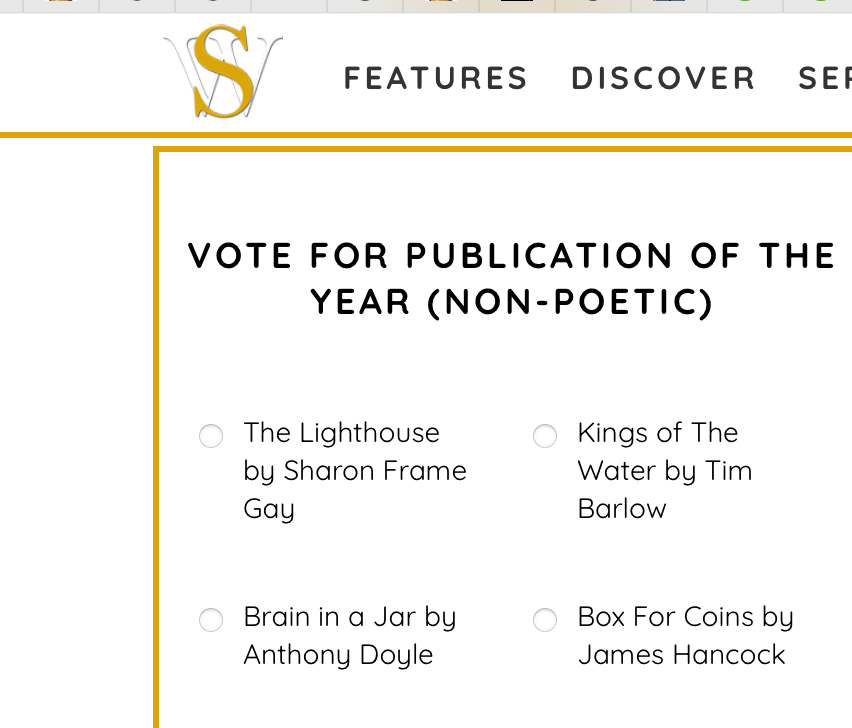
Anthony Doyle’s story is up for story of the year at SPILLWORDS!
“Brain in a Jar” is a haunting father-and-son story that deals with who men are, and who they have to prove they are.
As you know if you read my blog, Anthony wrote the novel I published, HIBERNACULUM, and it is one of my favorite books. I published it because I was stunned by his story-telling, and I still am.
Anthony is an indie writer really trying to make it, and notice like this helps a lot.
So please, if you have a moment, give Anthony a vote!
I also made him a write-in for SPILLWORDS author of the year.



Check out my new post, and all the posts by other writers, written for writers, about writing, at Authors Electric.
And find out what practice experts Brett and Eddy have to say about the practice of practice!

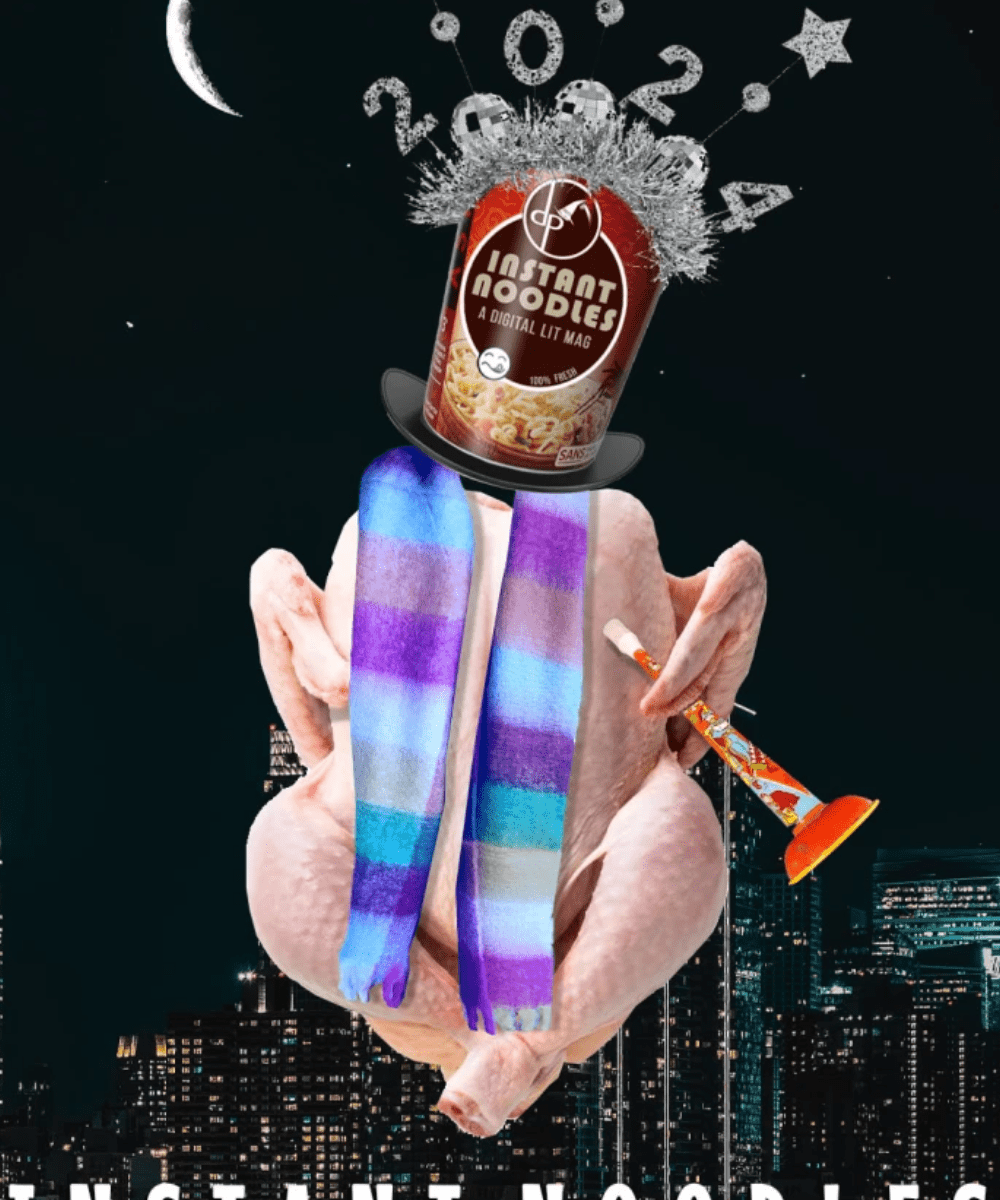

HAPPY HOLIDAYS! HAPPY 2024!
Check out the new, holiday-themed, INSTANT NOODLES! Free to read, free to submit!
Wishing you love and good food in 2024!
~Dianne

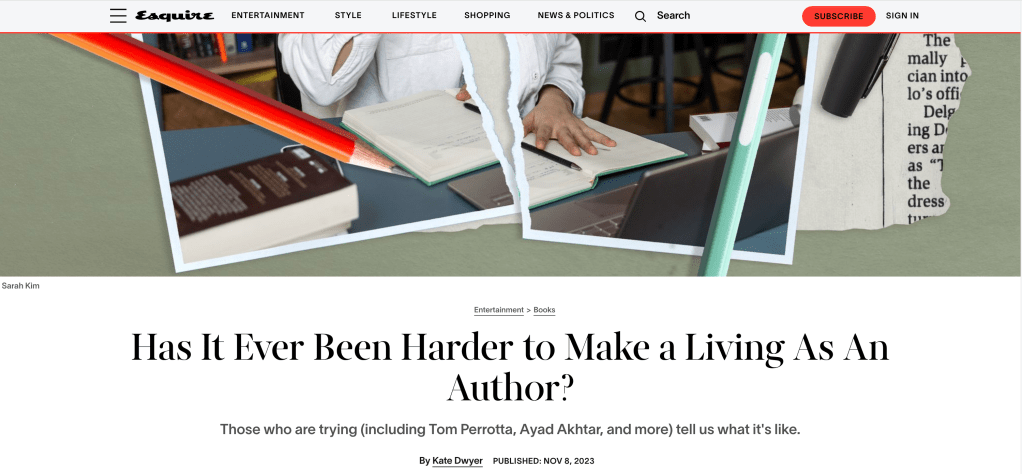
Aside from doing my own writing, and teaching and tutoring, I’m in the publishing biz. And, during my six years doing that I have really been delving into this topic over and over, not even for myself, in all honesty, but for the truly very talented authors I have helped to publish who I think should be making a living from their writing, because most authors are not making a living from their writing.
And, the ones that are, are probably working their social-media butts off, and probably not fully making a living. They probably have gainfully employed spouses, with health benefits, and are making a contributing amount as an author, but not a rent-paying amount. That is my guess, for the “in general” group. There are always outliers. But, there are not very many of those.
So I offer you two articles to read which I find helpful as an author for keeping me grounded:
THIS ONE:

AND THIS ONE:

May you write a good novel and finish it, and may it find its readers.


I think politics are extremely important, because they determine what rights I have as a woman in the United States, and, over the past few years, I lost the right to my own body because of them. Which is really a sickening thought. I do not own me.
And now we lost Senator Feinstein, who worked tirelessly to get me control of my own body, and protect me from gun violence, and tried to help to keep me in control of my own body. With her in the photo is former UC Chancellor, Sue Desmond-Hellmann, and another hero of mine, Congresswoman Nancy Pelosi, Speaker Emeritus, and one heck of a fighter.
I know many people will use the occasion of Senator Feinstein’s passing to jump on the bandwagon that she was impaired in her last year of service. As a person who has always given my service to others, I know how hard it can be to stop doing this, even when it would benefit you to do so. I understand. And, maybe, in hangin on, she has brought us to a conversation we need to have about how long people keep going. As a very late bloomer, I’m not sure how I feel about that.
And, MOST CERTAINLY, the work she wanted to get done is not done: guns are still killing people and I have lost ownership of my body, so I can imagine she felt it difficult to stop fighting for those things.
Rest in peace, dear Senator Feinstein. I am so proud to share a name with you, so proud to have twice had you as my senator, and I am so deeply grateful for your service.